

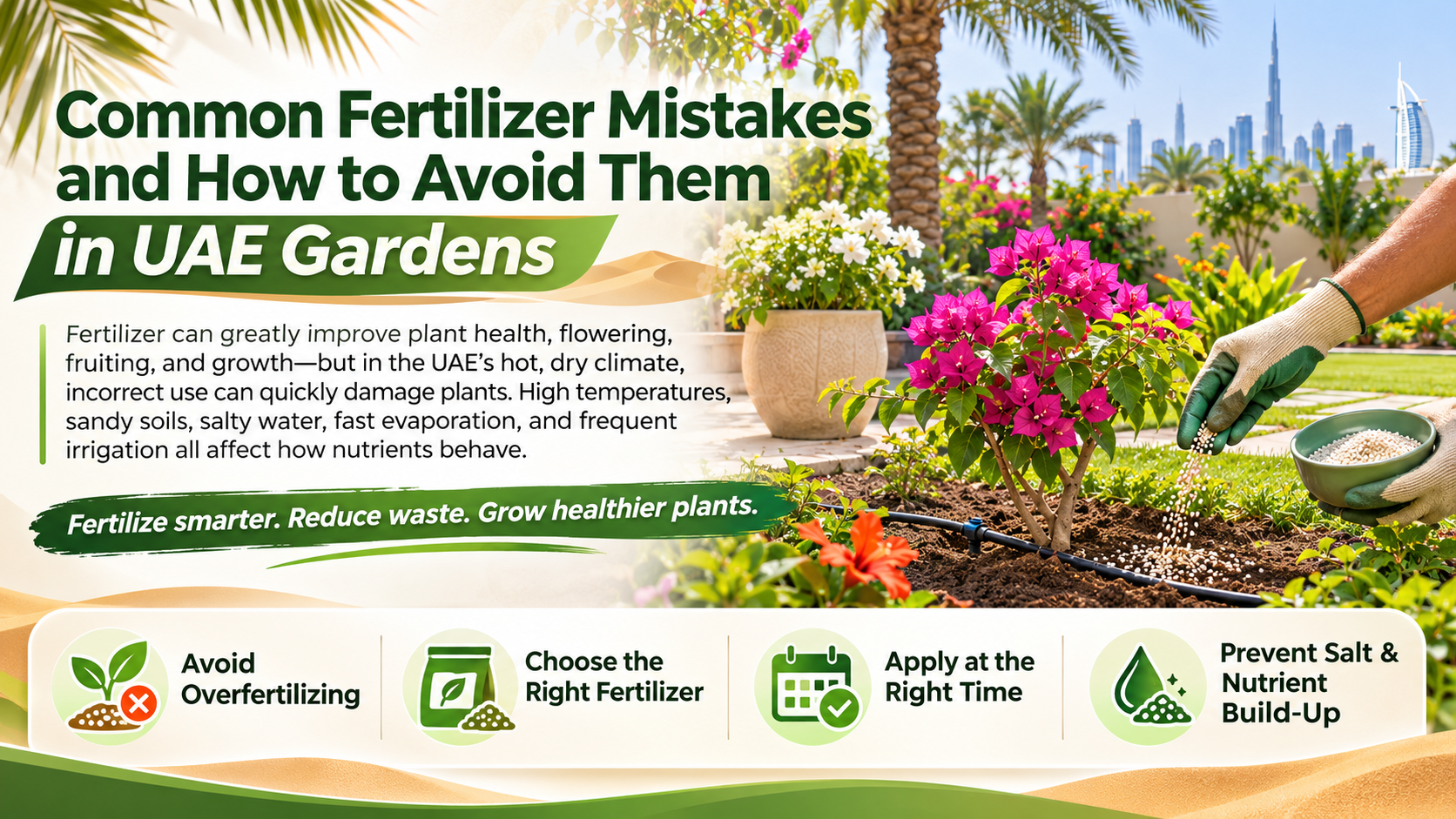
Fertilizer can make a big difference in plant health, flowering, fruiting, and overall growth. But in the UAE’s hot and dry climate, using fertilizer incorrectly can quickly harm plants instead of helping them. High temperatures, sandy soils, salty water, fast evaporation, and frequent irrigation all affect how nutrients behave in the soil.
For home gardeners, farmers, landscapers, schools, restaurants, and hydroponic growers, understanding how to fertilize correctly is essential. The right fertilizer plan saves money, reduces plant stress, prevents nutrient waste, and supports healthier, more sustainable growing.
At Al Falaj Gardens Agricultural Materials Trading LLC, located in Falaj Al Mualla, Umm Al Quwain, we support UAE growers with quality fertilizers, potting soils, seeds, indoor and outdoor plants, irrigation tools, hydroponic systems, and practical gardening solutions suited to local conditions.
Why Fertilizer Mistakes Are Common in the UAE
Many plant problems in the UAE are not caused by lack of care, but by wrong care. A plant may look weak, yellow, dry, or slow-growing, and the first reaction is often to add more fertilizer. However, the real issue may be heat stress, poor watering, compacted soil, salty water, unsuitable potting mix, or poor drainage.
In UAE gardens, fertilizer management is especially important because:
- Sandy soils do not hold nutrients well.
- High temperatures increase plant stress.
- Frequent watering can wash nutrients away.
- Salinity can build up in pots and soil.
- Over-fertilizing can burn roots quickly.
- Different plants need different feeding schedules.
A smart fertilizer plan starts with observation, proper watering, and choosing the right growing medium.
- Using Too Much Fertilizer
One of the most common fertilizer mistakes is thinking that “more fertilizer means faster growth.” In reality, too much fertilizer can burn plant roots, damage leaves, reduce flowering, and even kill plants.
Signs of Over-Fertilizing
Watch for these symptoms:
- Brown or burned leaf edges
- Yellowing leaves despite regular feeding
- White salt crust on soil surface
- Wilting even when soil is moist
- Poor root growth
- Sudden leaf drop
- Weak flowering or fruiting
In pots, fertilizer salts can build up faster because the root zone is limited. This is especially common in balcony gardens, indoor plants, and decorative pots.
How to Avoid It
Use fertilizer carefully and follow the recommended dose. For UAE conditions, it is often better to apply smaller amounts more regularly rather than one heavy dose.
Best practices include:
- Read the fertilizer label before applying.
- Avoid fertilizing dry soil.
- Water the plant lightly before feeding.
- Do not fertilize weak or heat-stressed plants immediately.
- Flush pots occasionally with clean water to remove salt buildup.
- Use high-quality potting soil with good drainage.
Al Falaj Gardens supplies suitable potting mixes, plant nutrients, and irrigation items that help maintain a healthier root zone for indoor plants, outdoor plants, and garden beds.
- Fertilizing at the Wrong Time
Timing is very important in the UAE. Fertilizing during extreme afternoon heat can stress plants and increase the risk of root burn. Plants absorb nutrients better when temperatures are moderate and moisture is available.
Best Time to Fertilize in UAE Conditions
The best time is usually:
- Early morning
- Late afternoon
- During cooler months when plants are actively growing
- After light irrigation, not during severe dryness
Avoid applying fertilizer during the hottest part of the day, especially in summer. During extreme heat, many plants slow down their growth. Feeding them heavily at this time may not help and can create more stress.
Seasonal Fertilizer Tip
In the UAE, many outdoor plants grow better from autumn to spring. During this period, vegetables, herbs, flowering plants, lawns, and landscape plants respond well to proper nutrition. In peak summer, reduce fertilizer strength and focus more on shade, irrigation, mulching, and heat protection.
- Using the Wrong Fertilizer for the Plant
Not all fertilizers are the same. A fertilizer suitable for leafy vegetables may not be ideal for flowering plants, fruiting crops, lawns, palms, succulents, or indoor foliage plants.
Common Fertilizer Selection Mistakes
Growers often make these mistakes:
- Using high-nitrogen fertilizer for flowering plants
- Using garden fertilizer for indoor plants without adjusting dose
- Applying the same fertilizer to all crops
- Using fast-release fertilizer in hot weather
- Ignoring micronutrients such as iron, magnesium, boron, and zinc
- Using soil fertilizer directly in hydroponic systems
For example, leafy greens need balanced nutrition for leaf growth, while flowering plants need support for buds and blooms. Hydroponic crops require water-soluble nutrients designed for soilless systems. Indoor plants usually need gentle feeding because they grow more slowly than outdoor plants.
How to Choose Correctly
Before choosing fertilizer, consider:
- Plant type
- Growth stage
- Soil or potting medium
- Water quality
- Season
- Whether the plant is in soil, cocopeat, potting mix, or hydroponics
Al Falaj Gardens provides guidance and supplies for different growing needs, including fertilizers, growing media, seeds, hydroponic items, irrigation systems, and imported indoor plants suitable for UAE homes, offices, schools, restaurants, farms, and landscaping projects.
- Ignoring Soil and Water Quality
In the UAE, soil and water quality strongly affect fertilizer performance. Many areas have sandy soils with low organic matter. Some irrigation water may contain salts. When fertilizer is added without considering these factors, plants may suffer from nutrient imbalance or salt stress.
Why Sandy Soil Needs Special Care
Sandy soil drains quickly and does not hold nutrients for long. This means fertilizer can be washed away easily with frequent irrigation. Adding organic matter and using proper soil amendments can improve nutrient retention and root health.
Helpful solutions include:
- Compost or organic manure
- Cocopeat-based potting mixes
- Mulching around plants
- Slow-release fertilizers
- Drip irrigation systems
- Regular but controlled watering
Fertilizer and Irrigation Must Work Together
Fertilizer works best when irrigation is managed properly. Overwatering can leach nutrients away. Underwatering can concentrate fertilizer salts around roots. Drip irrigation is one of the most efficient methods for UAE gardens because it delivers water directly to the root zone and reduces waste.
Al Falaj Gardens supplies irrigation equipment and tools that help gardeners and farmers improve water efficiency, reduce fertilizer loss, and support sustainable plant growth in hot climate conditions.
- Fertilizing Sick or Stressed Plants Too Quickly
When plants look unhealthy, many people immediately add fertilizer. But fertilizer is not always the solution. A plant suffering from heat stress, pests, root rot, poor drainage, transplant shock, or lack of water may not be able to absorb nutrients properly.
Check the Real Problem First
Before fertilizing, ask:
- Is the plant receiving too much or too little water?
- Is the soil draining properly?
- Are the roots healthy?
- Is the plant exposed to extreme sun?
- Are there pests or diseases?
- Is the pot too small?
- Is the plant suitable for the UAE climate?
For example, yellow leaves may be caused by overwatering, iron deficiency, poor drainage, salinity, root damage, or lack of light. Fertilizer should be applied only after identifying the likely cause.
Smart Recovery Method
For weak plants:
- Move potted plants to a cooler or shaded area if needed.
- Check soil moisture and drainage.
- Remove dead or damaged leaves.
- Treat pests if present.
- Use mild fertilizer only after the plant begins to recover.
- Avoid strong feeding during extreme heat.
This approach protects the plant and improves the chance of healthy recovery.
Practical Fertilizer Tips for UAE Gardeners
To fertilize successfully in UAE conditions, follow these simple guidelines:
- Use the right fertilizer for the right plant.
- Apply fertilizer during cooler parts of the day.
- Avoid feeding during extreme heat stress.
- Use good-quality potting soil for container plants.
- Combine fertilization with proper irrigation.
- Do not apply fertilizer to very dry soil.
- Use mulch to protect roots and reduce evaporation.
- Flush potted plants occasionally to reduce salt buildup.
- Feed indoor plants lightly and less frequently.
- For hydroponics, use only suitable hydroponic nutrients.
- Ask an expert before treating unknown plant problems.
Small improvements in fertilizer practice can produce stronger roots, greener leaves, better flowering, healthier crops, and more water-efficient gardens.
Conclusion: Fertilizer Works Best When Used Wisely
Fertilizer is a powerful tool for plant growth, but only when used correctly. In the UAE’s challenging climate, common mistakes such as over-fertilizing, feeding at the wrong time, using the wrong fertilizer, ignoring soil and water quality, or fertilizing stressed plants can cause serious damage.
The key is balance. Healthy plants need the right nutrients, proper watering, good soil, suitable timing, and protection from extreme heat. Whether you are growing vegetables, herbs, indoor plants, landscape plants, hydroponic crops, or ornamental gardens, correct fertilizer use helps you save water, reduce waste, and achieve better results.
For expert guidance and quality gardening supplies, visit Al Falaj Gardens Agricultural Materials Trading LLC in Falaj Al Mualla, Umm Al Quwain. Our team can help you choose suitable fertilizers, seeds, potting soils, indoor and outdoor plants, irrigation tools, hydroponic items, vertical garden systems, and landscaping solutions for UAE growing conditions.
Visit Al Falaj Gardens Shop or contact our store today for professional agricultural and gardening supplies in the UAE.