

Introduction: Why Drip Irrigation Matters in the UAE
In the UAE, water is one of the most valuable resources for agriculture, gardening, and landscaping. With high temperatures, sandy soils, strong sunlight, and low natural rainfall, plants need carefully managed watering to stay healthy. Traditional watering methods, such as hose watering or flood irrigation, often wastewater through evaporation, runoff, and deep drainage.
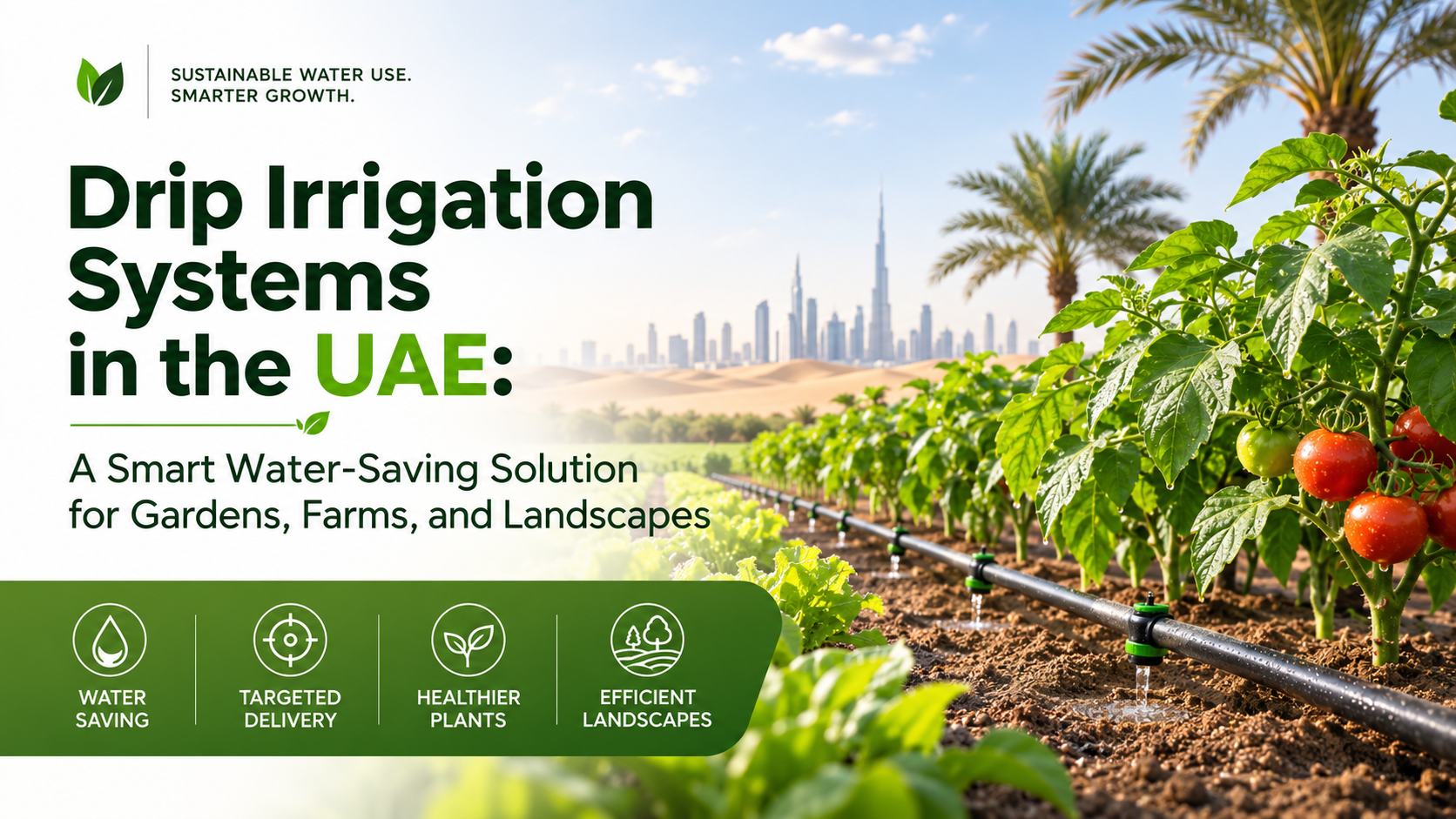
This is where drip irrigation systems become highly important. Drip irrigation delivers water slowly and directly to the root zone of plants. Instead of wetting the whole soil surface, it supplies water exactly where plants need it most. For UAE gardens, farms, nurseries, greenhouses, villas, schools, and commercial landscapes, drip irrigation is one of the most practical ways to save water, reduce plant stress, and improve growth.
At Al Falaj Gardens Agricultural Materials Trading LLC, located in Falaj Al Mualla, Umm Al Quwain, we provide irrigation equipment, seeds, indoor and outdoor plants, potting soils, vertical garden systems, hydroponic supplies, public health pesticides, and professional gardening, landscaping, hydroponic, and irrigation services suitable for UAE conditions.
What Is a Drip Irrigation System?
A drip irrigation system is a water delivery system that uses pipes, tubes, emitters, and drippers to supply water slowly near plant roots. It can be used for small home gardens, vegetable beds, fruit trees, greenhouses, nurseries, landscaping projects, and farms.
Main Parts of a Drip Irrigation System
A basic drip irrigation setup usually includes:
- Water source: Tank, main line, pump, or municipal water connection
- Filter: Helps prevent drippers from clogging
- Main pipe: Carries water from the source to the growing area
- Sub-main pipes: Distribute water to different sections
- Drip lines or lateral pipes: Run near plants or crop rows
- Emitters or drippers: Release water slowly to the root zone
- Valves: Control water flow to different areas
- Pressure regulator: Maintains suitable water pressure
- Timer or controller: Automates irrigation scheduling
- Fittings and connectors: Join pipes, elbows, tees, and end caps
When designed properly, a drip system can water plants evenly, reduce waste, and make irrigation easier to manage.
Benefits of Drip Irrigation in UAE Conditions
Drip irrigation is especially useful in the UAE because it supports water conservation and heat-resilient plant care.
- Saves Water
In hot climates, water evaporates quickly from exposed soil. Drip irrigation reduces evaporation because water is applied slowly and close to the roots. This makes it more efficient than sprinklers or manual hose watering.
- Supports Healthy Root Growth
Plants grow better when water reaches the root zone consistently. Drip irrigation helps maintain balanced soil moisture, which reduces stress and supports stronger roots.
- Reduces Weed Growth
Since drip irrigation waters only the area near the plant, dry spaces between plants receive less water. This can reduce weed growth compared to broad surface watering.
- Prevents Leaf Diseases
Sprinklers wet leaves, which may encourage fungal problems in some crops and ornamentals. Drip irrigation keeps leaves drier by watering the soil, not the foliage.
- Saves Time and Labour
With a timer or automatic controller, irrigation can be scheduled without daily manual watering. This is useful for busy homeowners, farmers, landscapers, schools, and commercial properties.
- Suitable for Many Applications
Drip irrigation can be used for:
- Home gardens and villa landscapes
- Vegetable crops and herbs
- Fruit trees and date palms
- Flower beds and ornamental plants
- Greenhouses and net houses
- Nurseries and plant production areas
- Raised beds and grow bags
- Vertical gardens and green wall systems
Designing a Drip Irrigation System for UAE Gardens and Farms
A good drip system should match the plant type, soil condition, water quality, climate, and size of the area.
Step 1: Understand Your Soil
Many UAE landscapes have sandy soil. Sandy soil drains quickly and does not hold water for long. This means irrigation should be applied in smaller, more frequent cycles instead of heavy watering at one time.
For gardens, raised beds, and pots, using quality potting media can improve water retention and root health. Al Falaj Gardens supplies suitable potting soils, cocopeat-based mixes, perlite, compost blends, and planting materials that support better moisture management.
Step 2: Group Plants by Water Needs
Not all plants need the same amount of water. A successful irrigation design separates plants into zones.
Examples:
- Low-water zone: Native plants, drought-tolerant shrubs, succulents
- Medium-water zone: Ornamentals, hedges, ground covers
- High-water zone: Vegetables, herbs, seedlings, newly planted trees
- Container zone: Pots, planters, grow bags, and balcony plants
Grouping plants correctly prevents overwatering some plants and underwatering others.
Step 3: Choose the Right Drippers
Different plants need different water flow rates.
Common options include:
- Low-flow drippers: Suitable for pots, small plants, and indoor planters
- Medium-flow drippers: Suitable for shrubs, ornamentals, and vegetable beds
- Higher-flow drippers: Suitable for trees, palms, and larger plants
- Inline drip pipes: Suitable for rows of vegetables, hedges, and ground covers
- Adjustable drippers: Useful for mixed plant sizes and decorative gardens
For UAE landscapes, good-quality drippers and filters are important because clogging can affect plant health quickly during hot weather.
Best Uses of Drip Irrigation in the UAE
Drip irrigation can be adapted for many agricultural and landscaping needs.
Home Gardens and Villas
For villas and residential landscapes, drip irrigation is ideal for lawns, hedges, trees, flower beds, vegetable patches, and potted plants. It helps maintain a beautiful garden while reducing water waste.
Vegetable and Herb Production
Farmers and gardeners can use drip irrigation for tomatoes, cucumbers, capsicum, eggplant, leafy greens, mint, basil, coriander, and other crops. It provides steady moisture and supports better crop quality.
Greenhouses and Net Houses
In protected cultivation, drip irrigation helps control water and fertilizer delivery. It is especially useful for greenhouse crops, nursery plants, and high-value vegetables.
Raised Beds and Grow Bags
Raised beds and grow bags dry out faster than ground soil. Drip irrigation gives consistent watering, which is useful for urban gardening, school gardens, and rooftop growing.
Green Walls and Vertical Gardens
Drip irrigation is commonly used in green wall systems to deliver water from the top and distribute it through the planting structure. Proper drainage and timers are important for indoor and outdoor vertical gardens.
Practical Maintenance Tips for Drip Irrigation Systems
A drip system needs regular checking to work properly. Simple maintenance can prevent plant damage and water loss.
Maintenance Checklist
- Clean filters regularly.
- Check drippers for blockage.
- Inspect pipes for leaks or cracks.
- Flush drip lines from time to time.
- Adjust irrigation timing during summer and winter.
- Make sure water pressure is suitable.
- Replace damaged fittings, connectors, or emitters.
- Use timers to avoid overwatering.
- Check plant response and adjust watering if leaves wilt or soil stays too wet.
Summer Irrigation Tips
During UAE summer, plants may need more frequent watering because of high heat and fast evaporation. However, the aim is not to flood the soil. Instead, provide controlled and regular watering.
Helpful tips:
- Water early morning or evening when possible.
- Avoid watering during peak afternoon heat.
- Use mulch around plants to reduce moisture loss.
- Increase irrigation frequency for young plants and vegetables.
- Reduce watering during cooler months.
- Monitor pots and grow bags carefully because they dry faster.
Common Mistakes to Avoid
Even a good drip irrigation system can fail if it is not planned or maintained correctly.
Avoid these common mistakes:
- Installing drippers without a filter
- Using the same irrigation schedule for all plants
- Overwatering sandy soil with long cycles
- Ignoring leaks and blocked emitters
- Placing drippers too far from the root zone
- Not adjusting watering during seasonal changes
- Using low-quality pipes and fittings in exposed outdoor areas
- Forgetting drainage for pots, planters, and green walls
A properly designed system saves water, protects plants, and reduces long-term maintenance problems.
Conclusion: Drip Irrigation Is Essential for Sustainable Growing in the UAE
Drip irrigation systems are one of the best solutions for UAE agriculture, gardening, and landscaping. They save water, reduce plant stress, support healthier roots, and make irrigation easier to manage. Whether you are growing vegetables in a greenhouse, maintaining a villa garden, installing a green wall, or managing nursery plants, drip irrigation helps you use water wisely and grow with confidence.
For the best results, choose the right drippers, filters, pipes, timers, potting media, and plant varieties according to your site conditions. With proper planning and maintenance, drip irrigation can make your garden or farm more productive, sustainable, and heat-resilient.
Visit Al Falaj Gardens Agricultural Materials Trading LLC in Falaj Al Mualla, Umm Al Quwain, for quality drip irrigation systems, irrigation tools, indoor and outdoor plants, seeds, potting soils, hydroponic supplies, vertical garden systems, pesticides, and professional gardening and landscaping support.
Contact Al Falaj Gardens today or visit our shop in Falaj Al Mualla to choose the right irrigation solution for your garden, farm, greenhouse, or landscaping project in the UAE.