


Introduction
Hydroponic farming is becoming one of the most practical and innovative agricultural methods in the UAE. In a country where high temperatures, limited freshwater resources, sandy soils, and harsh summer conditions make traditional farming challenging, hydroponics offers a smarter way to grow fresh vegetables, herbs, leafy greens, and specialty crops.
Hydroponics is a soil-less farming method where plants grow using water mixed with essential nutrients. Instead of depending on soil, plants receive nutrients directly through their roots. This allows better control over water, fertilizer, plant health, and production quality.
For farmers, gardeners, hydroponic growers, restaurants, schools, and landscaping professionals in the UAE, hydroponic farming can be a powerful solution for year-round crop production, efficient water use, and high-quality yields.
- Why Hydroponics Is Suitable for UAE Climate
The UAE climate is hot, dry, and often challenging for open-field farming. During summer, temperatures can rise above 40°C, causing heat stress, flower drop, poor fruit setting, and fast evaporation of irrigation water. Soil salinity is also a common issue in many areas.
Hydroponics helps reduce many of these challenges because it gives growers better control over the growing environment. Plants can be grown inside greenhouses, net houses, shaded structures, indoor farms, or climate-controlled rooms. This makes it easier to protect crops from extreme heat, sandstorms, pests, and water loss.
Hydroponic systems also use water more efficiently than traditional soil farming. Since water is usually recirculated in many systems, less water is wasted. This is especially important in UAE conditions where water conservation is a major priority.
Hydroponics is suitable for growing crops such as lettuce, spinach, basil, mint, coriander, parsley, kale, cherry tomato, cucumber, capsicum, strawberry, microgreens, and fodder crops.
- Best Hydroponic Systems for UAE Growers
Different hydroponic systems can be used depending on the crop, budget, available space, and level of automation required.
NFT System — Nutrient Film Technique
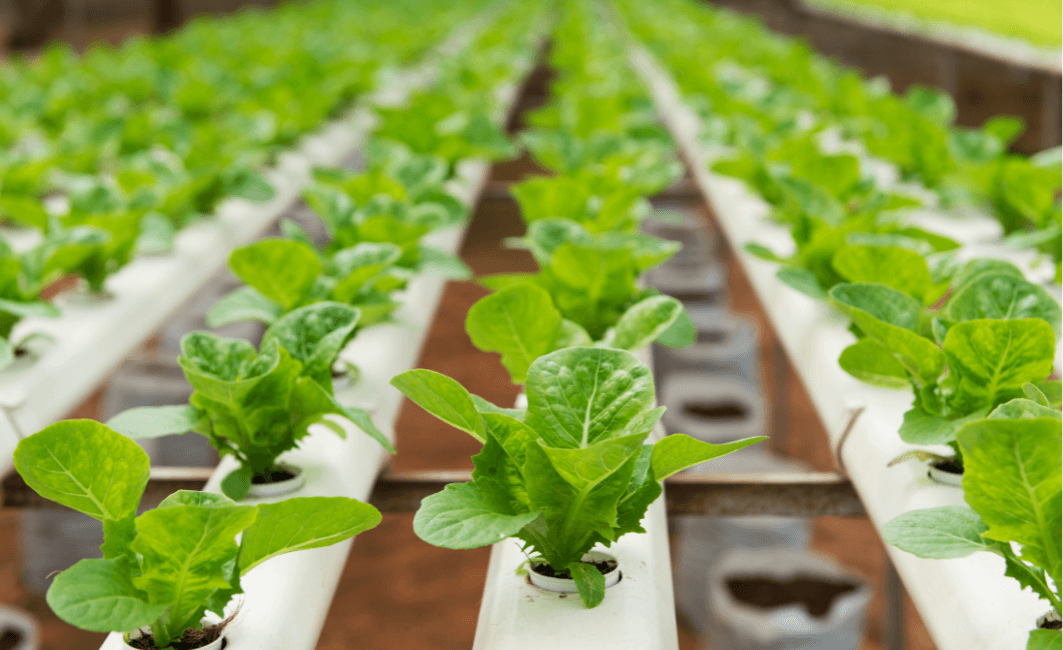
NFT is widely used for leafy greens and herbs. In this system, a thin film of nutrient solution flows through channels, feeding the plant roots continuously. It is ideal for lettuce, basil, mint, coriander, and spinach. NFT systems are space-saving and suitable for commercial farms, schools, home gardens, and rooftop growing.
Dutch Bucket System
Dutch bucket systems are excellent for larger fruiting crops such as tomato, cucumber, capsicum, and eggplant. Each plant grows in a bucket filled with media such as cocopeat, perlite, clay pebbles, or a mix. Nutrient solution is delivered through drip irrigation and excess water drains back or is collected separately.
Ebb and Flow System
In this system, the plant root zone is flooded with nutrient solution at intervals and then drained back. It is suitable for potted herbs, ornamental plants, and some vegetable crops. It is simple, effective, and useful for small to medium-scale growers.
Vertical Hydroponic Towers
Vertical towers are ideal where space is limited. They are useful for leafy greens, herbs, strawberries, and small vegetables. For UAE homes, restaurants, schools, and urban farms, vertical hydroponics is a practical way to produce fresh crops in compact areas.
Deep Water Culture — DWC
DWC allows roots to grow directly in oxygenated nutrient water. It works well for lettuce and leafy greens but requires good oxygen supply and water temperature management, especially in hot weather.
- Managing Heat and Light in UAE Hydroponics
Heat management is one of the most important success factors for hydroponic farming in the UAE. Even if the plant roots receive perfect nutrients, high air temperature or hot nutrient water can reduce growth and increase disease risk.
For outdoor or semi-protected hydroponic systems, growers should use shade nets, greenhouse cooling systems, exhaust fans, evaporative cooling pads, misting systems, and proper ventilation. During peak summer, 50% to 75% shade net may help protect sensitive crops such as lettuce and herbs.
Nutrient solution temperature should also be monitored. Warm water holds less oxygen, which can affect root health. For many leafy greens, keeping the nutrient solution cool and well-aerated improves plant performance. Insulated tanks, shaded reservoirs, white pipes, underground tank placement, or water chillers can help in summer.
Light is also important. Plants need enough light for photosynthesis, but excessive heat and direct sunlight can cause stress. In indoor hydroponics, grow lights can be used to provide controlled light for leafy greens, microgreens, herbs, and ornamental crops.
Good system design should balance light, temperature, humidity, airflow, and water quality.
- Water Quality and Nutrient Management
Water quality plays a major role in hydroponic success. In the UAE, water can sometimes have high salinity or high dissolved minerals. Before starting hydroponics, it is advisable to test water for EC, pH, sodium, chloride, calcium, magnesium, and bicarbonates.
The two most important daily measurements in hydroponics are pH and EC.
pH shows whether nutrients are easily available to plants. Most hydroponic crops perform well when pH is maintained around 5.5 to 6.5.
EC shows the strength of the nutrient solution. If EC is too low, plants may not receive enough nutrients. If EC is too high, roots may suffer from salt stress. Different crops need different EC levels. Leafy greens generally need lower EC compared to fruiting crops like tomato and cucumber.
Nutrient solutions should contain all essential elements, including nitrogen, phosphorus, potassium, calcium, magnesium, sulfur, iron, manganese, zinc, copper, boron, and molybdenum. For serious growers, using a proper A and B hydroponic nutrient formula is better than using general fertilizers.
Regular monitoring helps prevent nutrient imbalance, weak growth, yellowing leaves, tip burn, blossom end rot, and poor production.
- Crop Selection and Production Planning
Choosing the right crop is very important in UAE hydroponic farming. Some crops are easier and faster to grow, while others need more technical management.
For beginners, leafy greens and herbs are the best starting point. Lettuce, basil, mint, coriander, parsley, spinach, kale, arugula, and microgreens are fast-growing and suitable for NFT, DWC, vertical towers, and indoor systems.
For experienced growers, tomato, cucumber, capsicum, strawberry, melon, and eggplant can be highly productive, especially in greenhouses or controlled environments. These crops need stronger support systems, proper pruning, pollination management, and more careful nutrient control.
Production planning should consider the UAE seasons. The cooler months from autumn to spring are ideal for many crops, especially in greenhouses and net houses. During peak summer, growers may need cooling systems, shade structures, indoor growing, or heat-tolerant crop varieties.
Hydroponics also supports continuous production. By planning sowing, nursery raising, transplanting, harvesting, and cleaning schedules, growers can maintain regular supply for homes, restaurants, supermarkets, schools, and farm shops.
Practical Tips for Hydroponic Farming in UAE
Start with easy crops such as lettuce, basil, mint, coriander, or microgreens before moving to fruiting crops.
Use good-quality water and test pH and EC regularly.
Keep the nutrient tank shaded and protected from direct sunlight.
Clean pipes, filters, tanks, trays, and channels regularly to avoid algae and blockages.
Use proper aeration in nutrient tanks, especially during hot months.
Select crop varieties suitable for UAE conditions and protected farming.
Maintain good airflow to reduce fungal diseases and improve plant strength.
Use insect netting, sticky traps, and regular crop inspection for pest control.
Avoid overcrowding plants, as poor spacing reduces airflow and increases disease risk.
Keep a simple record of planting date, nutrient level, pH, EC, temperature, harvest date, and crop performance.
Train staff or workers on daily monitoring because hydroponics depends on regular checking and quick correction.
Conclusion
Hydroponic farming is one of the most promising agricultural solutions for the UAE climate. It allows growers to produce fresh, clean, and high-quality crops with less water, better space utilization, and more control over plant growth. Whether used in commercial farms, villas, schools, restaurants, rooftops, greenhouses, or indoor growing rooms, hydroponics can support sustainable food production in the UAE.
However, success depends on proper system design, water quality, nutrient management, temperature control, crop selection, and regular maintenance. With the right knowledge and equipment, hydroponics can become a profitable and sustainable growing method for both beginners and professional growers.
Call to Action
Al Falaj Gardens Agricultural Materials Trading LLC, UAQ, UAE provides complete hydroponic solutions, including system design, materials supply, installation, nutrients, growing media, irrigation components, automation, maintenance support, and crop production guidance.
For hydroponic farming solutions, greenhouse growing systems, vertical farming, irrigation, landscaping, and agricultural materials, contact Al Falaj Gardens and start growing smarter in the UAE climate.