

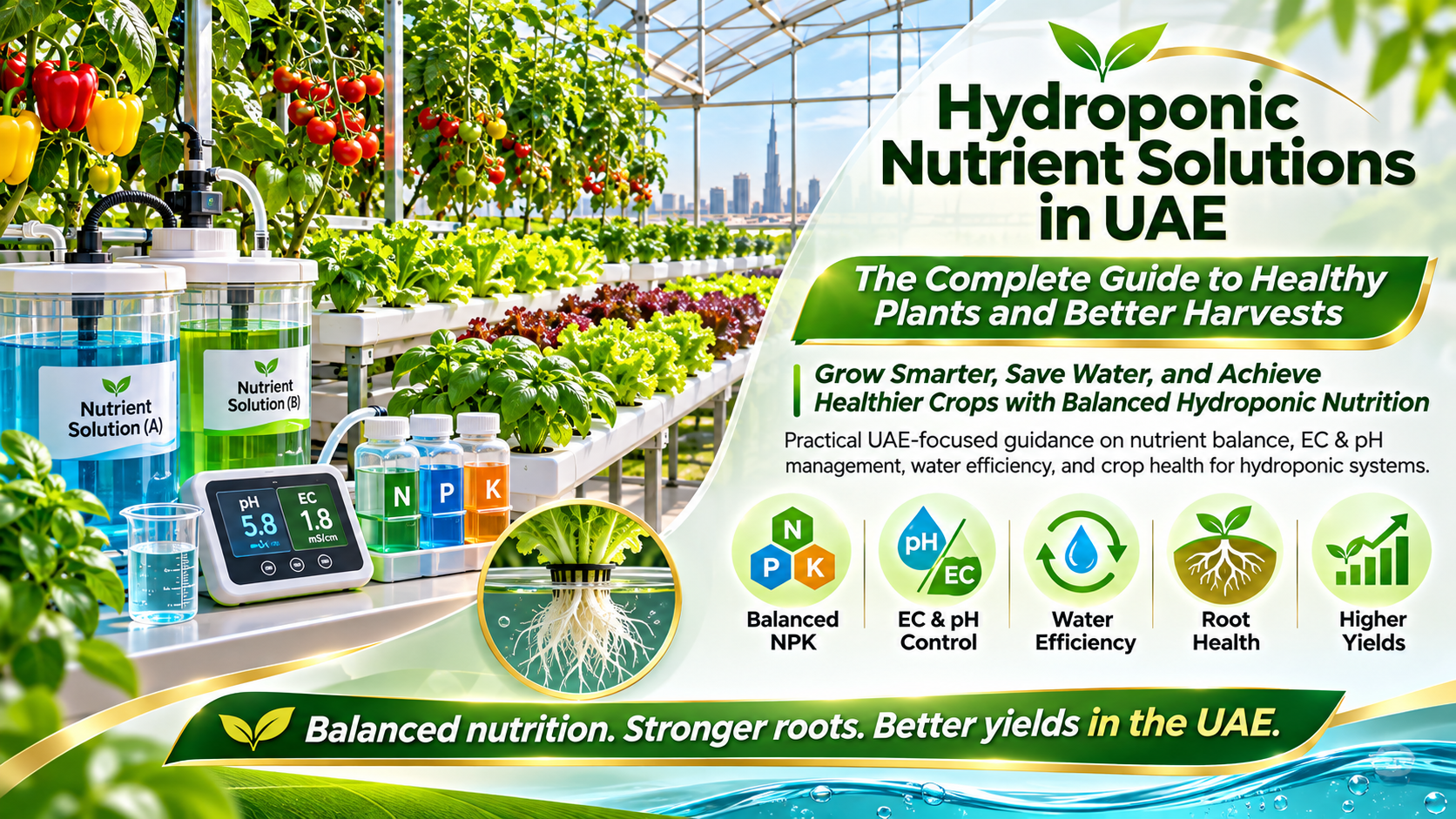
Grow Smarter, Save Water, and Achieve Healthier Crops with Balanced Hydroponic Nutrition
Hydroponic farming is transforming agriculture in the UAE, offering an innovative way to grow fresh vegetables, herbs, and other crops without traditional soil. With high temperatures, limited freshwater resources, and challenging soil conditions, hydroponics provides an efficient and sustainable growing solution for home gardeners, schools, greenhouse operators, and commercial farmers.
However, successful hydroponic farming depends on one essential factor: the right hydroponic nutrient solution.
Unlike plants grown in soil, hydroponic crops depend on carefully balanced nutrients dissolved in water. Understanding nutrient composition, water quality, pH, and electrical conductivity (EC) helps growers develop stronger roots, healthier plants, and more productive crops.
Whether you are starting a small balcony hydroponic garden or managing a commercial greenhouse in the UAE, this guide explains how to provide plants with the nutrition they need.
- What Is a Hydroponic Nutrient Solution?
A hydroponic nutrient solution is a mixture of water and essential mineral nutrients that supports plant growth without conventional soil.
In traditional gardening, plants absorb nutrients from the soil. In hydroponic systems, these nutrients are supplied directly to the roots through water, allowing growers to control plant nutrition more precisely.
A properly managed nutrient solution helps:
- Promote healthy root development and vigorous plant growth.
- Support stronger leaves, flowers, and fruit formation.
- Reduce nutrient deficiencies and fertilizer wastage.
- Improve crop quality and productivity.
- Support efficient water and nutrient use.
Hydroponic nutrient solutions are used in Nutrient Film Technique (NFT), Deep Water Culture (DWC), Dutch Bucket, drip irrigation, and other soilless growing systems.
Each system requires appropriate nutrient management based on the crop, growth stage, and growing environment.
- Essential Nutrients Required for Hydroponic Plant Growth
Plants need a balanced supply of nutrients to complete their growth cycle. These nutrients are divided into major nutrients and micronutrients.
Major Plant Nutrients
- Nitrogen (N): Encourages leafy growth and supports chlorophyll production.
- Phosphorus (P): Supports root development, flowering, and energy transfer.
- Potassium (K): Helps regulate water balance, fruit development, and plant resilience.
- Calcium (Ca): Supports healthy cell development and growing tissues.
- Magnesium (Mg): Essential for chlorophyll formation and photosynthesis.
- Sulfur (S): Contributes to protein formation and healthy plant growth.
Important Micronutrients
Plants also require smaller quantities of iron, manganese, zinc, boron, copper, molybdenum, chlorine, and nickel.
Although required in tiny amounts, these elements are essential for normal plant development.
Important: Different crops require different nutrient formulations. Lettuce and leafy greens generally need less concentrated solutions than mature fruiting crops such as tomatoes.
Using complete, hydroponic-specific fertilizers helps maintain nutrient balance. Many professional formulations are supplied as separate Part A and Part B concentrates to prevent unwanted reactions between concentrated nutrients.
- Understanding pH and EC in Hydroponic Nutrient Solutions
Maintaining the correct pH and EC is essential for successful hydroponic crop production.
pH: Nutrient Availability
pH indicates how acidic or alkaline the nutrient solution is.
For many hydroponic crops, a pH range of 5.5–6.5 provides a useful starting point, although individual crops may require different levels.
When pH becomes too high or too low, plants may struggle to absorb essential nutrients, even when sufficient fertilizer is present.
EC: Nutrient Solution Strength
Electrical conductivity measures the concentration of dissolved ions in the solution. It helps growers estimate solution strength, although it cannot identify individual nutrient deficiencies.
Typical EC guidelines include:
- Lettuce and leafy greens: 1.2–2.0 mS/cm.
- Basil: 1.0–1.6 mS/cm.
- Tomatoes: 2.0–4.0 mS/cm, depending on crop stage and conditions.
These values are general guidelines rather than fixed targets.
Regular monitoring using digital pH and EC meters helps growers maintain suitable nutrient concentrations and avoid overfertilization.
Al Falaj Gardens offers digital pH and EC testing equipment suitable for hydroponic nutrient monitoring, irrigation water testing, and greenhouse applications.
- How to Prepare and Manage Hydroponic Nutrient Solutions in UAE Conditions
The UAE’s hot climate makes nutrient solution management especially important. High water temperatures, evaporation, and saline water sources can affect nutrient balance and root health.
Follow these practical recommendations for successful hydroponic growing.
- Start with good-quality water
Test source water for pH, EC, alkalinity, and salinity. Water containing excessive dissolved salts may require filtration or reverse osmosis treatment before nutrients are added.
- Select the correct nutrient formulation
Choose complete hydroponic fertilizers appropriate for leafy vegetables, herbs, or fruiting crops. Follow manufacturer instructions and adjust feeding according to plant development.
- Mix nutrients correctly
Fill a clean reservoir with water. Add each fertilizer component separately, mixing thoroughly between additions. Never combine concentrated Part A and Part B fertilizers directly.
- Monitor pH and EC regularly
Check nutrient levels daily where practical, especially during hot weather. Adjust EC first, then pH, using suitable products and calibrated meters.
- Protect nutrient reservoirs from excessive heat
Keep reservoirs shaded, insulated, and protected from direct sunlight. Maintain suitable water temperatures and oxygen availability to reduce root stress.
- Maintain clean equipment and healthy roots
Inspect pumps, filters, drippers, irrigation pipes, and nutrient tanks. Clean equipment regularly and replace nutrient solutions when testing or crop conditions indicate that renewal is necessary.
- Choose suitable growing media
High-quality cocopeat, perlite, and other hydroponic growing media provide physical support while maintaining moisture and air around plant roots.
Al Falaj Gardens supplies growing media, hydroponic accessories, irrigation equipment, nutrient-monitoring instruments, and agricultural materials to support efficient crop production.
- Improve water-use efficiency
Use properly designed recirculating hydroponic systems, reliable pumps, irrigation timers, and controlled nutrient delivery. Minimize leaks, unnecessary drainage, and nutrient discharge.
For UAE growers, combining efficient irrigation with greenhouse ventilation, shading, and suitable cooling systems can help maintain productive growing conditions during warmer months.
Conclusion: Better Nutrition for Smarter Hydroponic Farming
Successful hydroponic farming begins with understanding plant nutrition and maintaining a balanced growing environment.
By choosing appropriate fertilizers, monitoring pH and EC, maintaining good water quality, and protecting roots from excessive heat, UAE growers can improve plant health, use water more efficiently, and achieve more consistent harvests.
From leafy vegetables and fresh herbs to tomatoes, cucumbers, and capsicums, proper nutrient management supports productive and sustainable soilless farming.
Grow Successfully with Al Falaj Gardens
AL FALAJ GARDENS Agricultural Materials Trading LLC, located in Falaj Al Mualla, Umm Al Quwain, UAE, provides agricultural supplies and practical solutions for hydroponic farming, greenhouse crop production, irrigation, gardening, and landscaping.
Whether you are a beginner, educator, professional grower, or agricultural engineer, explore our range of hydroponic equipment, growing media, fertilizers, water-testing instruments, and irrigation accessories.
Visit the Al Falaj Gardens Online Shop or contact our store in Falaj Al Mualla, Umm Al Quwain, for hydroponic farming and gardening supplies.
AL FALAJ GARDENS — One Destination. Every Growing Need.