

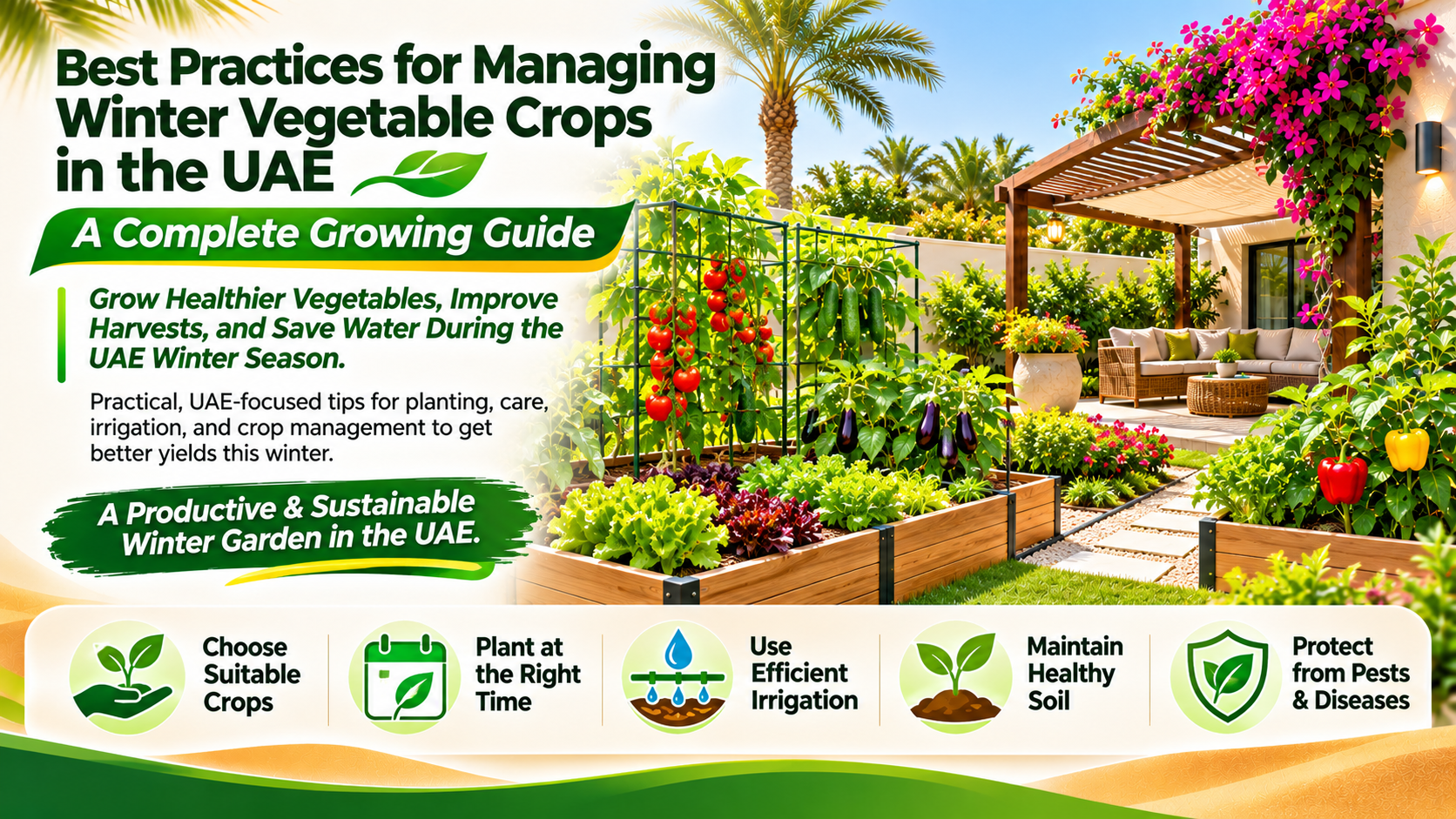
Best Practices for Managing Winter Vegetable Crops in the UAE: A Complete Growing Guide Grow Healthier Vegetables, Improve Harvests, and Save Water During the UAE Winter Season:
Winter is one of the most rewarding seasons for vegetable cultivation in the United Arab Emirates. As temperatures become milder from October to March, farmers, home gardeners, schools, and commercial growers enjoy excellent opportunities to produce fresh, healthy vegetables.
However, successful winter vegetable farming in the UAE requires more than planting seeds and watering regularly. Sandy soils, occasional temperature fluctuations, saline irrigation water, dry winds, and seasonal pests can affect crop growth and productivity.
By following effective crop management practices, growers can improve vegetable quality, increase yields, conserve irrigation water, and maintain healthy plants throughout the growing season.
At Al Falaj Gardens Agricultural Materials Trading LLC, located in Falaj Al Mualla, Umm Al Quwain, we support sustainable vegetable cultivation with quality seeds, growing media, fertilizers, irrigation equipment, hydroponic systems, and professional agricultural solutions.
- Choose the Right Winter Vegetables and Plant at the Right Time
Selecting suitable crops is the foundation of successful winter gardening in the UAE.
The cooler months provide favorable growing conditions for many leafy vegetables, root crops, herbs, and selected fruiting vegetables.
Recommended winter vegetable crops include:
- Leafy vegetables: Lettuce, spinach, kale, Swiss chard, arugula, and cabbage.
- Root vegetables: Carrots, radishes, beetroot, and turnips.
- Fruiting vegetables: Tomatoes, cucumbers, capsicum, chili peppers, and eggplants.
- Cole crops: Broccoli, cauliflower, and Brussels sprouts.
- Herbs: Coriander, parsley, dill, mint, and celery.
Most cool-season vegetables perform well when planted between October and February, depending on the crop, variety, and growing location. Fruiting vegetables generally benefit from early autumn establishment and adequate warmth.
Essential planting recommendations
Choose vegetable varieties adapted to UAE growing conditions and purchase seeds from reliable suppliers. Follow recommended plant spacing to maintain airflow and reduce disease development.
Use healthy seedlings when transplanting tomatoes, capsicum, eggplants, and other long-duration crops.
For continuous harvesting, consider succession planting, which means sowing small quantities of fast-growing vegetables such as lettuce, radish, and arugula at regular intervals.
- Prepare Healthy Soil and Use Quality Growing Media
Healthy root development begins with suitable soil or growing media.
Many UAE soils are sandy, low in organic matter, and have limited water and nutrient retention. Some locations also experience high soil salinity and alkaline conditions.
Improving the growing environment helps vegetables establish stronger roots and maintain consistent growth.
Best soil and growing media practices
Improve soil structure: Incorporate mature, properly processed compost and suitable organic amendments to increase moisture retention and microbial activity.
Use quality potting mixes: Containers, grow bags, and raised beds benefit from balanced mixtures containing low-EC cocopeat, perlite, and other suitable components that provide moisture retention and root aeration.
Maintain balanced nutrition: Apply fertilizers according to crop requirements, growth stage, and soil or growing media test results. Avoid excessive nitrogen application, which can encourage soft growth and reduce crop quality.
Monitor pH and salinity: Check soil or nutrient solution conditions periodically to prevent nutrient deficiencies and salt accumulation.
Al Falaj Gardens supplies quality potting media, fertilizers, growing containers, seedling trays, and gardening tools to support healthy vegetable cultivation.
- Manage Irrigation Efficiently and Protect Crops from Weather Stress
Water management is especially important in the UAE, where evaporation, sandy soils, and variable water quality influence crop performance.
Although winter temperatures are lower, vegetables still require consistent moisture for healthy growth and productivity.
Smart irrigation practices
Install drip irrigation systems: Drip irrigation delivers water close to plant roots, minimizing evaporation and unnecessary water loss.
Adjust watering frequency: Monitor soil moisture and modify irrigation according to crop size, weather conditions, soil texture, and rainfall.
Irrigate during suitable hours: Early morning watering is generally recommended to support water absorption and reduce unnecessary evaporation.
Apply organic mulch: A suitable mulch layer helps conserve moisture, moderate root-zone temperatures, and suppress weeds.
Check irrigation water quality: High salinity can restrict nutrient uptake and reduce crop productivity.
Winter vegetables also need protection from strong winds, unusual cold spells, and sudden warm conditions. Temporary shade nets, windbreaks, and protective crop covers can help maintain suitable growing conditions.
For commercial farms, properly designed irrigation systems improve water-use efficiency and reduce operating costs.
- Prevent Pests and Diseases and Improve Crop Productivity
Cooler weather does not eliminate agricultural pests. Aphids, whiteflies, thrips, caterpillars, leaf miners, and spider mites can still affect winter vegetable crops.
Fungal diseases may also develop where humidity is high, leaves remain wet, or ventilation is inadequate.
Effective pest prevention begins with regular crop monitoring.
Inspect leaves, stems, flowers, and developing fruits frequently. Remove badly affected plant material, control weeds, and maintain adequate spacing between plants.
Introduce an Integrated Pest Management (IPM) approach by combining field hygiene, pest monitoring, beneficial insects, physical barriers, and approved crop-protection products when necessary.
Always use pesticides registered for the relevant crop and pest in the UAE, following label instructions and pre-harvest intervals.
Consider greenhouse and hydroponic production
Protected cultivation and hydroponic systems provide additional opportunities for efficient winter vegetable production.
Greenhouses and net houses help growers manage wind exposure, insect entry, and environmental conditions. Good ventilation remains essential to prevent overheating and humidity buildup.
Hydroponic systems, including Nutrient Film Technique (NFT) and Dutch bucket systems, allow vegetables to grow in carefully managed nutrient solutions or soilless growing media.
When properly designed and maintained, recirculating hydroponic systems can significantly reduce water consumption while supporting consistent production.
Al Falaj Gardens provides hydroponic equipment, irrigation accessories, growing media, and customized crop production solutions for homes, schools, and commercial farms.
Conclusion: Grow Smarter This Winter with Al Falaj Gardens
Successful winter vegetable cultivation in the UAE depends on choosing suitable crops, maintaining healthy growing media, managing irrigation efficiently, supplying balanced nutrients, and preventing pest problems.
Whether you are growing vegetables in a home garden, school garden, greenhouse, or commercial farm, adopting sustainable agricultural practices helps improve harvest quality while conserving valuable resources.
Make every winter growing season more productive, efficient, and sustainable with Al Falaj Gardens.
Visit Al Falaj Gardens for Complete Vegetable Growing Solutions
Explore our quality vegetable seeds, potting mixes, fertilizers, irrigation systems, gardening tools, grow bags, and hydroponic equipment.
Shop Online at Al Falaj Gardens or visit Al Falaj Gardens Agricultural Materials Trading LLC, Falaj Al Mualla, Umm Al Quwain, UAE, for professional agricultural supplies and gardening solutions.
Al Falaj Gardens — One Destination. Every Growing Need.
Your One-Stop Destination for Agriculture & Gardening Solutions.