

Introduction: Why Hydroponic Farming Matters in the UAE
Farming in the UAE is both exciting and challenging. The country has strong sunlight, long summers, limited natural freshwater, sandy soils, high temperatures, and dusty winds. For farmers, gardeners, schools, nurseries, and commercial growers, these conditions can make traditional soil-based farming difficult and water-intensive.
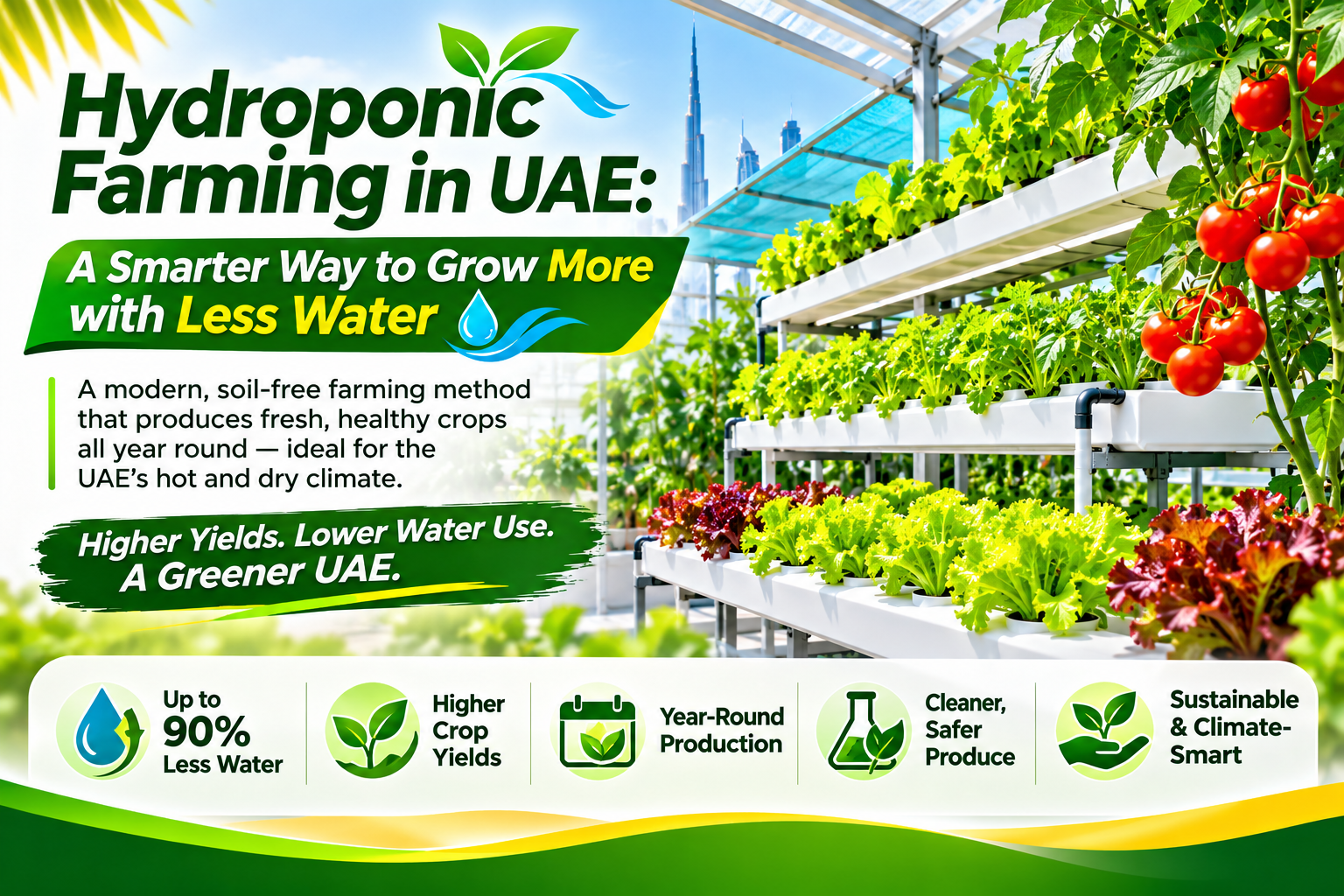
This is where hydroponic farming in UAE becomes a powerful solution. Hydroponics is a method of growing plants without soil. Instead, plants receive nutrients through water, while their roots are supported by growing media such as cocopeat, perlite, clay pebbles, or rockwool. This system allows growers to produce fresh vegetables, herbs, leafy greens, and even some fruiting crops in a more controlled and efficient way.
For the UAE’s hot climate, hydroponic farming offers three major advantages: water saving, space efficiency, and better control over plant growth. Whether you are a farmer planning a commercial setup, a school introducing agricultural education, or a home gardener interested in fresh lettuce and herbs, hydroponics can be a practical and future-ready farming method.
At Al Falaj Gardens Agricultural Materials Trading LLC, located in Falaj Al Mualla, Umm Al Quwain, we support growers with hydroponic systems, irrigation tools, seeds, growing media, plants, garden supplies, and professional guidance for UAE conditions.
H2: What Is Hydroponic Farming?
Hydroponic farming is a soil-free growing system where plants receive water, oxygen, and nutrients directly at the root zone. Instead of depending on soil quality, the grower manages the plant’s environment more precisely.
In simple terms, hydroponics allows plants to grow using:
- Clean water
- Balanced plant nutrients
- Proper oxygen around roots
- Suitable growing media
- Controlled irrigation
- Correct light and temperature
Because the roots get direct access to nutrients, plants often grow faster and healthier when the system is properly managed.
Common Hydroponic Systems Used in UAE
Some popular hydroponic systems include:
- NFT System – Nutrient Film Technique
Best for leafy vegetables such as lettuce, basil, coriander, spinach, kale, and mint. A thin layer of nutrient-rich water flows through channels where plant roots absorb what they need. - Dutch Bucket System
Suitable for larger crops such as tomatoes, cucumbers, capsicum, eggplant, and some fruiting plants. Each plant grows in a bucket filled with media such as cocopeat and perlite. - Deep Water Culture System
Plants are placed above oxygen-rich nutrient water. This system is commonly used for leafy greens. - Ebb and Flow System
The root zone is flooded with nutrient solution at intervals, then drained. It is useful for nursery crops, herbs, and educational projects. - Vertical Hydroponic Systems
Ideal for limited spaces, balconies, schools, restaurants, and indoor growing areas. These systems help produce more plants in a smaller footprint.
Why Hydroponics Is Ideal for UAE Climate Conditions
The UAE climate is known for high summer temperatures, sandy soil, and water scarcity. Hydroponic farming helps solve many of these challenges.
- Water Conservation
One of the biggest benefits of hydroponics is water efficiency. In a well-designed system, water is recirculated instead of being lost into the soil. This can significantly reduce water wastage compared with traditional open-field irrigation.
For UAE growers, this is especially important because saving water is not only economical but also environmentally responsible. Hydroponics supports sustainable farming by using water more carefully and efficiently.
- Better Growth in Poor Soil Areas
Many areas in the UAE have sandy soils with low organic matter and limited water-holding capacity. Growing vegetables directly in such soil can require heavy soil improvement, frequent irrigation, and careful fertilization.
Hydroponics avoids this issue because crops do not depend on natural soil. Instead, plants grow in controlled media and receive nutrients through water. This makes hydroponics suitable for farms, greenhouses, rooftops, schools, and urban gardening projects.
- Protection from Heat and Dust
Hydroponic systems can be installed inside greenhouses, net houses, shade structures, indoor grow areas, or temperature-controlled rooms. This helps protect crops from extreme sunlight, hot winds, dust, and pest pressure.
In UAE conditions, successful hydroponic farming often depends on proper climate management, including:
- Shade net or greenhouse covering
- Ventilation fans
- Cooling pads
- Water temperature control
- Good airflow
- Proper spacing between plants
- Higher Production in Smaller Spaces
Hydroponics is excellent for areas where land is limited. Vertical systems, NFT channels, and compact grow units allow growers to produce leafy greens and herbs in small spaces. This makes hydroponics suitable for villas, schools, restaurants, nurseries, supermarkets, and commercial farms.
Best Crops for Hydroponic Farming in UAE
Hydroponics can be used for many crops, but beginners should start with easier and faster-growing plants.
Easy Hydroponic Crops for Beginners
Good beginner-friendly crops include:
- Lettuce
- Basil
- Mint
- Coriander
- Parsley
- Spinach
- Kale
- Arugula
- Pak choi
- Microgreens
These crops grow quickly and are suitable for NFT systems, vertical systems, and small home units.
Commercial Hydroponic Crops
For commercial growers, popular hydroponic crops include:
- Tomato
- Cucumber
- Capsicum
- Strawberry
- Eggplant
- Leafy lettuce varieties
- Culinary herbs
Fruiting crops need more technical management, including proper nutrient balance, pruning, pollination support, trellising, and climate control.
Practical Tips for Successful Hydroponic Farming in UAE
Hydroponics is simple to understand, but it requires regular care. A small mistake in water, nutrients, or temperature can affect plant health.
Here are important tips for UAE growers:
- Choose the right system for your crop
Use NFT for leafy greens and herbs. Use Dutch buckets for tomatoes, cucumbers, and larger fruiting crops. - Use good-quality seeds and seedlings
Healthy crops begin with strong seeds and disease-free seedlings. Al Falaj Gardens supplies seeds, plants, trays, and nursery materials suitable for gardening and crop production. - Monitor water quality
Check pH and EC regularly. These two values help ensure plants receive nutrients correctly. - Protect the root zone from heat
In summer, high water temperature can stress roots. Use shade, insulation, proper tank placement, and cooling methods where needed. - Use suitable growing media
Cocopeat, perlite, clay pebbles, and rockwool are commonly used in hydroponics. Good media supports roots, holds moisture properly, and allows oxygen movement. - Maintain clean systems
Clean tanks, pipes, filters, channels, and pumps regularly. Hygiene helps prevent algae, blockage, and root diseases. - Provide correct irrigation and circulation
Pumps, drippers, timers, filters, and irrigation fittings must be reliable. Al Falaj Gardens offers irrigation equipment and tools that support efficient water management. - Start small and expand gradually
Beginners should start with leafy greens or herbs before moving into larger commercial systems.
How Al Falaj Gardens Supports Hydroponic Growers
Al Falaj Gardens Agricultural Materials Trading LLC is more than a gardening shop. We support farmers, gardeners, schools, landscapers, and agriculture professionals with both products and practical services.
Our range includes:
- Hydroponic system design and installation
- Green wall and vertical garden solutions
- Seeds and planting materials
- Indoor and outdoor plants
- Irrigation tools and fittings
- Potting soils and growing media
- Garden supplies and landscaping materials
- Public health pesticides
- Gardening, landscaping, and irrigation services
For educational institutions, hydroponics is also a valuable learning tool. It helps students understand plant science, water conservation, sustainability, nutrition, and modern agriculture. For farmers and commercial growers, it offers a smart method to increase production while reducing water use.
Conclusion: Hydroponics Is the Future of Smart Farming in the UAE
Hydroponic farming in UAE is not just a modern trend. It is a practical response to the country’s climate, soil, and water challenges. By growing without soil, recycling water, controlling nutrients, and protecting crops from harsh weather, hydroponics allows growers to produce fresh, clean, and high-quality crops throughout the year.
For beginners, hydroponics can start as a small home or school project. For farmers and entrepreneurs, it can grow into a profitable commercial farming system. The key is to choose the right system, use good-quality materials, manage water carefully, and get expert guidance suited to UAE conditions.
Ready to start hydroponic farming in the UAE?
Visit Al Falaj Gardens Agricultural Materials Trading LLC in Falaj Al Mualla, Umm Al Quwain, for hydroponic systems, seeds, growing media, irrigation tools, plants, gardening supplies, and expert support. Contact our team today and take the first step toward smarter, water-saving, and sustainable farming.